Blog

  • How to Teach a Toddler to Swim | Helpful Advice For Parents

    How to Teach a Toddler to Swim | Helpful Advice For Parents

    Learning to swim is a significant milestone in a child’s early life, and serves as a foundational life skill that opens up a world of fun and safety.

    However, the path to becoming a swimmer is rarely a straight line. Every child reacts differently to the water, and what works for one might lead to tears for another. You might face unexpected hurdles, from sudden bouts of fear to developmental plateaus. These challenges are a natural part of the learning process as your toddler navigates a brand-new environment.

    For those interested in teaching their toddler to swim, there are several ways to start ranging from casual play to structured programs. 

    While options like parent-child classes offer gentle water exposure, they often focus more on comfort rather than building independent aquatic and survival skills. If your goal is to ensure your child has measurable, life-saving skills, Infant Swimming Resource (ISR) stands out as the most effective choice. 

    Why Should You Teach Your Kid to Swim?

    Before we explore the different options available to teach your child to swim, it is helpful to look at why this skill is so incredibly valuable. 

    Swimming is a foundational life skill that serves as a primary layer of safety whenever your family is near a pool, lake, or beach. By starting early, you help your toddler develop a healthy respect for the water rather than a paralyzing fear of it. This early exposure creates a safe space for them to understand their boundaries while gaining confidence.

    The physical advantages of swimming at a young age are also impressive for their growing body, as regular time in the water supports the development of balance, coordination, and overall muscle control. These movements engage the entire body in ways that typical land-based play might not. Over time, you will likely notice your child becoming more aware of their physical capabilities as they learn to navigate the water.

    Beyond the physical milestones, swimming offers significant emotional benefits for your toddler. It fosters a sense of independence and self-reliance as they master new skills. The process also provides a unique opportunity for trust building and bonding between your child and their instructor or parent. These shared experiences create a strong emotional foundation that extends far beyond the pool deck.

    Additional Reading – When Can Babies Start Swim Lessons

    When Can A Toddler Start Swimming Lessons?

    Determining the right time to start swimming lessons often depends on your child’s individual emotional and developmental readiness. Generally, Infant Swimming Resource (ISR) classes can begin for children as young as 6 months old. 

    At this age, babies can begin learning vital self-rescue skills tailored to their physical capabilities. Starting early helps ensure that water safety becomes a natural part of their development before any fear of the water has a chance to set in.

    What is the Best Way to Teach Toddlers How to Swim?

    Choosing the right swimming method can feel a bit overwhelming since each approach serves a very different purpose. Some families prioritize fun and social interaction, while others focus strictly on safety, survival, and independent aquatic skills . Understanding these differences helps you match a program to your toddler’s personality and your own family’s lifestyle.

    Infant Swimming Resource (ISR)

    In our opinion, ISR is the best way to teach your toddler how to swim. The reason being, ISR is a specialized, instructor-led program that focuses exclusively on survival-based water skills.

    Unlike parent-child classes, it is designed to teach children how to save themselves if they ever reach the water alone. What sets this approach apart is its focus on giving children a functional toolset to handle an emergency rather than just splashing for fun.

    • Overview: Brief, intense sessions focusing on survival and self-rescue.
    • Environment: One-on-one lessons with a certified instructor in a controlled pool.
    • What Your Child Will Learn: Breath control and the “swim-float-swim” sequence.
    • Lesson Structure: 10-minute daily lessons to build muscle memory and ensure skill retention without fatigue.

    This program is highly recommended for parents who want measurable results and a faster path to water safety. You can expect your child to gain serious, life-saving skills that provide an extra layer of protection and peace of mind.

    Additional Reading – How ISR Skills Build a Strong Swimming Foundation

    Parent-Child Classes

    Parent-child group classes are a popular choice for parents who want to be directly involved in the learning process. They offer a gentle, low-pressure introduction to the pool environment through play and social interaction. The focus here is on creating positive associations with water rather than mastering formal survival techniques and swimming skills.

    • Overview: Instructor-led group sessions where parents stay in the water.
    • Engagement: Parents participate alongside the toddler during guided songs and games.
    • What Your Child Will Learn: Water comfort, supported floating/buoyancy , and kicking.
    • Lesson Structure: Weekly 30-minute classes

    These classes are ideal if you are looking for a recreational activity that fosters bonding and water acclimation. You can expect a social environment where your child learns to enjoy the water at a relaxed and exploratory pace.

    Self-Guided Exposure

    A self-guided approach is entirely led by parents during casual time at a home or community pool. This is often the most flexible and least intimidating option for toddlers who might be shy around strangers. It allows you to introduce water concepts at your own pace without any external pressure or set curriculum.

    • Overview: Parent-led learning that happens during free swim or home pool time.
    • Approach: Skills are taught informally through repetition, play, and daily routine.
    • What Your Child Will Learn: General comfort, splashing, and safe entry or exit.
    • Lesson Structure: No set schedule; short practice sessions during regular swim time.

    This method is best for families who prefer complete flexibility and want to build water familiarity through everyday play. You can expect your child to become more comfortable with the water’s sensation, though progress depends entirely on your personal consistency. However, they only learn as much as you can teach them.

    How to Determine Which Option is Best For Your Child

    Deciding which path to take depends largely on your family’s specific goals. If you prefer a relaxed environment where your child can explore at their own pace, parent-child or self-guided options offer great flexibility. 

    However, if your priority is a clear, step-by-step progression of skills, a structured ISR program is much more effective.

    When evaluating these choices, consider the following factors:

    • Safety Focus: While most lessons emphasize comfort, ISR is specifically designed around survival skills rather than just play.
    • Parental Role: You can choose between hands-on participation in group classes or a professional, instructor-led model like ISR.
    • Emotional Support: ISR instructors are expertly trained to help toddlers work through hesitation or fear in a very controlled, supportive way.
    • Goal: Are you looking to teach your child swimming skills? Or do you just want them to have fun splashing in the water?

    For families who want to move past the “splashing” phase and gain true peace of mind, ISR is the most effective choice. It provides tangible, life-saving skills that give you confidence every time your child is near the water.

    Helpful Toddler Swimming Tips For Parents

    To help make the process smoother for both you and your little one, here are some practical tips to keep in mind as you begin this important life-saving adventure together.

    Start in a Controlled Environment

    When introducing your toddler to the water, the setting makes all the difference. You want a space that feels predictable and safe, like a bath tub, a heated indoor pool or a shallow, calm area of a familiar swimming spot. 

    For formal training, ISR lessons take place in a highly controlled pool environment where a certified instructor can focus entirely on your child’s needs. Starting in a stable environment helps minimize distractions and prevents your child from becoming overwhelmed by cold temperatures or loud noises

    Early Exposure is Recommended

    The sooner a child becomes familiar with the water, the more natural the environment will feel to them as they grow. 

    Experts often suggest that early exposure is key to preventing deep-seated fears later in life. By starting as early as 6 months, children can begin to develop a healthy respect for the water and learn foundational safety skills before they reach the more “defiant” toddler years.

    The benefits of starting early include:

    • Acclimation: Early exposure helps the water feel like a normal part of life rather than a scary novelty.
    • Skill Retention: Younger children often adapt to the “swim-float-swim” method more quickly because they haven’t developed bad habits.

    Keep it Fun and Stress-Free

    While safety is the ultimate goal, the process of getting there should be as positive as possible. If a child senses that a parent is anxious, they are more likely to feel uneasy themselves. Incorporating play, songs, and gentle encouragement helps keep the atmosphere light, especially during exploratory sessions. 

    Even in structured programs like ISR, instructors are trained to handle hesitation with patience, ensuring the child feels supported throughout the process. Keeping the experience stress-free encourages your toddler to stay curious and engaged with their lessons.

    Wear Appropriate Swimwear

    The right gear is about more than just looking cute, it is about safety and functionality. For toddlers who are not yet potty trained, a high-quality, reusable swim diaper is often required by most professional swim schools to maintain pool hygiene.

    Some things to keep in mind when selecting swimwear include:

    • Fit: Ensure swimwear is snug so it doesn’t snag or cause drag in the water.
    • Visibility: Brightly colored suits, such as neon orange or pink, make it much easier to spot a child underwater compared to blue or green.
    • Warmth: In cooler pools, a thermal swim shirt can help your child stay comfortable and focused for longer periods.

    Learn the Rules of the Pool

    Pool safety begins even before your child enters the water. Teaching your toddler basic pool deck rules helps them understand that the water is a place that requires respect and attention. Simple instructions, such as “no running” and “wait for an adult,” should be reinforced every single time you visit a pool. Consistency is the best way to help these rules stick. 

    By establishing these boundaries early, you create a culture of safety that your child will carry with them as they become more independent swimmers.

    Always Keep an Eye on Your Child

    No amount of training or skill can ever replace active adult supervision. Even if your child has mastered self-rescue techniques, you must remain vigilant whenever they are near any body of water. This means staying within arm’s reach and avoiding distractions like phones or books. 

    Water safety is a multi-layered approach that includes fences, alarms, and supervision, but the most critical layer is your undivided attention. Constant eyes-on-child supervision is the most effective way to prevent accidents and ensure a safe, fun experience for everyone.

    Work with a Certified ISR Instructor

    If you want your child to gain specific, survival-based skills, working with a professional is the best path forward. Certified ISR instructors undergo rigorous training to understand the unique physical and psychological needs of infants and toddlers. 

    They provide one-on-one attention that group classes simply cannot offer, tailoring every 10-minute session to your child’s progress.

    Get Your Toddler Started With ISR Swim Lessons

    Teaching a toddler to swim is always about safety first and confidence second, with vital skills that are intentionally built over time. 

    While the idea of starting ISR lessons might feel a bit intimidating at first, the process is designed to be supportive for the whole family. 

    What truly sets ISR apart is its structured, survival-focused approach that consistently delivers proven outcomes. By choosing this method, you are providing your child with a specialized set of skills designed for real-world water safety.There is no better time than now to prioritize your child’s safety and well-being. So take the next step today by scheduling your child’s first ISR lesson and watch them grow into a confident, capable swimmer.
  • When Can Babies Go in the Pool & Start Swimming Lessons?

    When Can Babies Go in the Pool & Start Swimming Lessons?

    Bringing your child into a pool for the first time is a significant milestone that often leads to a mix of excitement and anxiety. On one hand, you want to share a new experience with your child. But on the other hand, you’re worried about things like water safety, physical development, or potential illnesses. These concerns are valid and shared by many families as they navigate early parenthood.

    So, you are likely wondering, how old does my baby have to be before they can safely go in the water or start swimming lessons? Most pediatricians give the “green light” for babies to start swimming at 6 months. 

    This age is a common milestone because the baby has typically developed better head and core control. Additionally, their immune systems have matured enough to handle shared pool environments, as they are better at regulating their own body temperature. 

    With that said, pool exposure alone will not develop your child’s abilities to float and swim. Let’s take a look at the two most common types of swimming lessons and see how they differ.

    The Two Main Types of Swimming Lessons for Children 

    When choosing how to introduce your baby to the water, it is helpful to compare the two most common methods. While both get your child in the pool, their goals and results are very different. 

    The following table provides a quick look at how traditional swim classes compare to the Infant Swim Resource (ISR) program.

    Feature Parent-Child Classes (Traditional) Infant Swim Resource (ISR)
    Primary Goal Comfort and bonding  Self-rescue and floating 
    Format Weekly group sessions  Intensive daily 1-on-1 
    Instruction Parent holds the baby  Specialist-led instruction 
    Key Result Early water exposure  Independent survival skills 

    Parent-Child Classes

    Traditional parent-child classes focus on creating a low-stress environment for both the baby and the caregiver. These sessions usually involve group singing, gentle splashing, and playing with water toys. 

    The primary goal is to help your baby feel comfortable in the water while you hold them. It serves as a wonderful bonding activity for families who want a relaxed way to spend time together.

    However, it is important to understand the limitations of this format.. The primary focuses are fun and water acclimation, not teaching a child how to survive an aquatic emergency

    Therefore, relying solely on these classes can sometimes create a false sense of security for parents. Since the parent is always holding the child, the baby will not learn how to handle the water independently.

    Drawbacks of traditional classes:

    • The parent always holding the baby can prevent the child from learning independent buoyancy.
    • Weekly sessions are often too infrequent for a child to retain important muscle memory.
    • A focus on play might create a false sense of security for parents regarding water safety.
    • Group settings mean the instructor cannot provide constant individual attention to your baby.

    Infant Swim Resource (ISR)

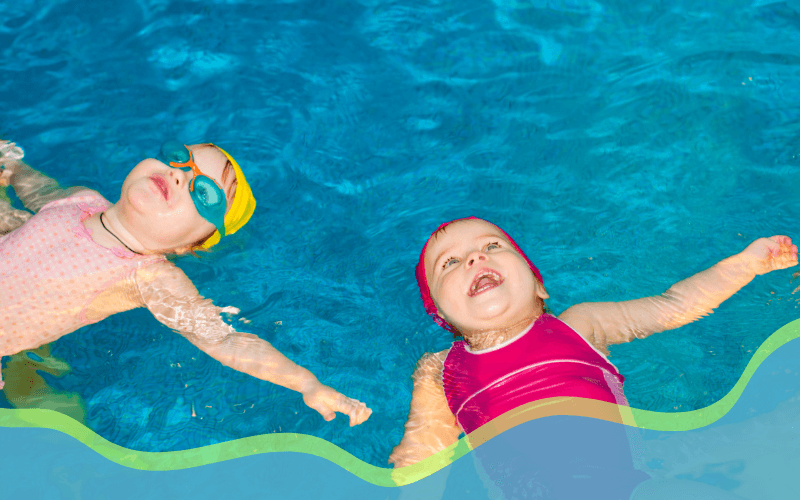
    For parents who prioritize safety and survival, ISR is the recommended choice. This intensive program is designed to teach babies as young as 6 months how to roll onto their backs and float if they ever fall in. Toddlers and older children learn the “swim-float-swim” sequence to reach safety. 

    The 1-on-1 approach ensures that a certified specialist is focused entirely on your child’s specific needs and progress. The program consists of 10-minute lessons that are held four to five consecutive days per week over the course of 6 weeks. Over the course of the program, your child will learn essential self-rescue skills and gain confidence and competence in the water.

    With ISR being a specialized method, it provides a level of expert-led safety that traditional group sessions simply cannot replicate. 

    Benefits of the ISR approach:

    • Babies as young as six months learn to roll onto their backs and float if they fall into water.
    • Toddlers learn a “swim-float-swim” sequence to reach safety effectively.
    • One-on-one instruction allows for specialized techniques tailored to your child’s specific needs.
    • Lessons prioritize the ability to find air, which is the most critical factor in a water emergency.
    • Certified instructors provide a level of expert safety that DIY sessions or group classes cannot match.

    Additional Reading – ISR vs. Regular Swim Lessons for Infants

    Important Factors to Consider Before Going Swimming

    Preparing your baby for the water involves more than just picking a class. You must account for their physical health, the environment of the pool, and the equipment needed for a safe experience. These considerations help manage common parent concerns regarding safety and development. 

    Pay Attention to Pool Temperature and Time Limits

    One of the most critical aspects of infant water safety is monitoring how their bodies react to the temperature. 

    Because babies are much smaller than adults, they lose body heat up to four times faster. This makes them highly susceptible to chilling, even in water that feels comfortable to you. This means that ideal pool temperatures for infants typically fall between 79°F and 99°F. If you are swimming in a pool at the lower end of this range, it is vital to keep the sessions short, usually between 10 to 15 minutes max.

    Parents must stay vigilant for physical signs that a baby is getting too cold. Shivering is the first major warning sign that the baby’s core temperature is dropping. You should also check their extremities and face for any changes in color. If you notice blue or discolored lips, exit the pool immediately, dry the baby off, and begin the warming process.

    Signs your baby needs to exit the water:

    • Visible shivering or trembling of the limbs.
    • Discolored or blue-tinged lips and fingernails.
    • Excessive fussiness or sudden lethargy.
    • Skin that feels notably cold to the touch after a short period.

    Make Sure Your Baby Has the Correct Swimwear

    Choosing the right swimwear is about much more than just style, it is a matter of hygiene and safety. Most professional swim schools and public pools require a “double diaper” policy to maintain water quality. 

    The first layer is a disposable swim diaper, which is designed to hold solids without swelling up like a standard diaper. The second, and most important, layer is a reusable neoprene swim cover. This cover features tight-fitting cuffs around the waist and legs to ensure a secure seal. 

    This industry standard is designed to prevent fecal matter from entering the pool, which can lead to recreational water illnesses for all swimmers. 

    Additionally, you must consider sun protection if you are outdoors. Since sunscreen is not recommended for infants under 6 months old, you should opt for a long-sleeve rash guard with a UPF 50+ rating.

    Essential swimwear components:

    • Disposable Swim Diaper: The base layer intended to trap solid waste.
    • Neoprene Cover: A snug-fitting outer layer that prevents leaks.
    • UPF 50+ Rash Guard: Provides mechanical sun protection for sensitive skin.
    • Wide-Brimmed Hat: Protects the baby’s face and neck from direct UV rays.

    Follow Safety Rules In and Out of the Water

    Pool safety requires 100% of your attention at all times, with no exceptions for distractions like phones or conversations. 

    When you are at a pool, you should always remain within arm’s reach of your baby. This “touch supervision” ensures that you can provide immediate intervention if the baby’s face accidentally goes under or if they lose their balance. Even a few seconds of distraction can lead to a dangerous situation, so staying focused is the primary responsibility of the supervising adult.

    If you choose to enroll in an ISR class, safety extends to the credentials of the person teaching your child. You should always verify that your instructor is fully certified by the organization. Working with a certified professional provides a level of specialized technique and expert-led safety that DIY sessions simply cannot replicate. 

    Key safety protocols for parents:

    • Stay within arm’s reach of your baby at all times while near water.
    • Monitor your child with zero distractions in case immediate intervention is required.
    • Confirm your instructor is certified.

    Stay Aware of Any Health Risks and Red Flags

    The health of your baby and the other children in the pool depends on following strict hygiene protocols. 

    One of the most important rules is to ensure your baby does not drink the pool water. Even in well-maintained pools, swallowed water can lead to “Recreational Water Illnesses” which often cause symptoms like diarrhea or vomiting. 

    There are also times when it is best to skip a scheduled swim lesson for the safety of everyone involved. For example, if your child has diarrhea, you must keep them home to avoid the risk of contaminating the entire pool. Similarly, if your baby is dealing with an ear infection, the pressure and moisture of the pool can cause further discomfort or complications. 

    Being proactive about these red flags helps maintain a healthy environment for all students. 

    Red flag signs keep your baby out of the pool:

    • Keep the baby home if they have diarrhea to prevent the risk of illness to others.
    • Skip class if your child is currently suffering from an ear infection.
    • Exit the water if you suspect the pool chemicals are not properly balanced.

    Take the First Step to Get Your Child Swimming Safely

    Determining the right time to begin is a balance between standard medical advice and your child’s individual development. While six months is the general age for pool entry, starting is about the right mix of physical milestones and parent preparedness. 

    Remember, your choice of class format is a critical part of the safety equation. While a parent-child swim class is a fun bonding activity, it doesn’t provide the same level of safety and training of an ISR program. Working with a certified ISR instructor ensures your child learns survival swimming techniques that casual sessions cannot replicate. 

    At My Baby Swims, we have two certified ISR providers who can help your child take the first step in their swimming journey. Our goal is to provide the highest level of water safety training to equip your baby with essential self-rescue skills.

    If you’re ready to get started, contact us now and reserve your child’s spot in an upcoming class.

  • The Benefits of Off-Season ISR Classes for Your Child

    The Benefits of Off-Season ISR Classes for Your Child

    For many families, swim lessons are a key part of summer fun but often take the back seat once the cooler months roll in. However, enrolling your child in off-season ISR (Infant Swimming Resource) classes provides numerous benefits that extend beyond just maintaining swim skills. Here’s why off-season ISR classes with My Baby Swims are an excellent choice for parents looking to keep their children safe and strong swimmers regardless of the time of year.

    1. Reinforcing Water Safety Year-Round

    Stay Safe in Every Season

    Children should be water-safe and competent regardless of the season. Drowning is a risk at any time of the year, especially in warmer climates like San Diego, where pools and beaches are always accessible. Off-season ISR classes ensure that your child’s self-rescue skills remain sharp, giving you peace of mind that your little one can respond effectively in an aquatic emergency. 

    2. Preventing Skill Regression

    Maintain Hard-Earned Progress

    Although the swimming skills learned in ISR are sensorimotor, off-season classes allow young children to continue practicing, refining, and progressing their skills. Off-season classes will prevent regression, ensuring that your child retains the skills they worked so hard to acquire and will be ready for summertime swimming fun!

    3. Building Confidence in the Water

    Confidence Grows with Consistency

    Consistency is key to building and maintaining confidence in the water. Children who regularly participate in swim lessons are less likely to fear the water and more likely to enjoy it. When they feel confident in their abilities, they are more likely to approach swimming with enthusiasm and excitement. This positive association can make the transition back to summer swimming easier and more enjoyable, allowing them to continue progressing without hesitation.

    4. Physical and Cognitive Development

    Swimming Promotes Growth Beyond Safety

    Swimming offers numerous physical and cognitive benefits. Off-season ISR lessons provide regular practice for your child to exercise, build strength, and improve coordination. Along with elevating their cognitive growth by improving focus, memory, and problem-solving abilities.

    5. Flexible Scheduling for Busy Families

    Fit Lessons Into Your Routine

    One of the great advantages of off-season ISR lessons is that they can be more flexible than peak-season classes. With fewer families enrolling in lessons during the cooler months, it’s often easier to find a schedule that fits your family’s routine. 

    Conclusion

    Off-season ISR classes offer significant benefits for children, from maintaining water safety and preventing skill regression to boosting confidence and supporting physical development. By continuing lessons throughout the year, you’re not only reinforcing the life-saving skills your child has already learned but also setting them up for continued growth and enjoyment in the water. Whether your family swims year-round or just during the summer, off-season ISR lessons ensure your child is always prepared, confident, and safe in the water.

  • 3 Reasons Why You Shouldn’t Use Swim Floaties And What To Do Instead

    3 Reasons Why You Shouldn’t Use Swim Floaties And What To Do Instead

    When teaching young children to swim, safety and confidence are paramount. Swim floaties and other floating devices are popular tools that parents often use to help their children feel secure in the water. However, using a flotation device has many disadvantages and creates a false sense of security. Here’s a closer look at the cons of using swim floaties that will help you make an informed decision for your child’s swimming journey.

    The Dangers and Cons of Swim Floaties, Water Wings, and Puddle Jumpers

    1. False Sense of Security

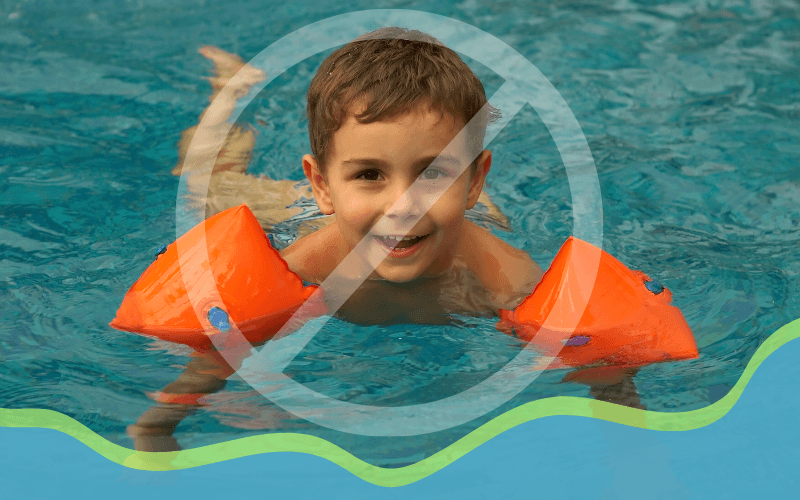
    Relying on floaties creates a false sense of security, buoyancy, and dependency. Not only may the child become overly confident in their swimming abilities, but they become accustomed to the extra support. When a child swims with floaties, they also think they can swim without them, which can lead to a child going into the water on their own and believing they will float to the surface for a breath.  They will not.

    2. Hindrance to Proper Technique and Body Posture

    Floaties impede the development of proper and effective swimming techniques and posture. They restrict arm movement and put the child in a vertical posture. Swimming vertically leads to sinking, panic, and an increased risk of drowning.

    3. Risk of Deflation

    Some floaties can puncture or deflate, leading to a sudden loss of buoyancy. This can be hazardous if it happens when the child is in deep water.

    Floating Device Alternatives 

    1. Supervision

    Constant supervision is the most effective and critical layer of water protection and safety. It is important that your child is never left unattended around the water. Ensure that you or a responsible adult is always watching and within arm’s reach of your infant or young child when they are in or near the pool.

    2. Swim Lessons

    Enroll your child in formal swim lessons, such as the ISR program offered at My Baby Swims. Our lessons focus on teaching critical self-rescue skills and proper swimming postures. Remember self-rescue swim lessons are not a substitute for constant supervision. 

    Use Life Jackets During Open Water Swimming

    It is important to recognize that swimming in natural bodies of water such as oceans, lakes, and rivers is very different from swimming in a pool. Properly fitted and Coast Guard approved life jackets should always be worn on boats and around any source of open water.

  • ISR Skills Build a Strong Swimming Foundation

    ISR Skills Build a Strong Swimming Foundation

    The ISR self-rescue program offered at My Baby Swims turns little ones into aquatic problem solvers! Although our students learn how to self-rescue in an aquatic emergency, they also become competent swimmers who confidently and effectively navigate themselves through the water. ISR provides a strong foundation of skills for both recreational and competitive swimming. Here’s why ISR serves as a beneficial swimming precursor and how it facilitates an easier transition to learning the swimming strokes.

    Foundational Skills

    ISR Teaches Core Self-Rescue Skills

    ISR teaches foundational skills such as floating on your back and horizontal swimming, which is the best way to move through the water. When children are familiar with these basic principles of buoyancy and proper body positioning in the water, it becomes much easier for them to learn strokes and other swimming techniques.

    Confidence in the Water

    ISR Instills Water Confidence Early On

    One of the primary benefits of ISR is that it helps children become comfortable and confident in the water from an early age. Skills before thrills of course.  Once children gain these skills, their confidence in the water comes next.  Additionally, they are more open and receptive and capable of learning new skills, including the traditional swimming strokes and techniques.

    Smooth Transition to Stroke Swim Lessons

    ISR Graduates Adapt Well to Stroke Lessons 

    ISR graduates often transition smoothly into stroke lessons because they have already developed essential skills such as breath control, buoyancy, proper body positioning, rolling to a float (which becomes a side breath) and propulsive kicking and pulling. 

    Long-Term Benefits of ISR

    A Lifelong Foundation for Water Safety and Swimming Proficiency

    Ultimately, ISR provides a lifelong foundation for water safety and swimming proficiency. Children who begin their aquatic education with ISR are not only equipped with critical survival skills but also possess a level of comfort and confidence in the water that sets them up for success in learning more advanced swimming techniques. As a real lasting bonus, succeeding at a difficult task early in life can lead to a can-do attitude for many challenges as children grow up.

  • Debunking Myths About ISR: Separating Fact from Fiction

    Debunking Myths About ISR: Separating Fact from Fiction

    My Baby Swims is a specialized swim school located in San Diego that uses the ISR method. The ISR method is a survival swim program designed to teach infants and young children critical self-rescue skills that enhance their ability to respond to aquatic emergencies. Despite ISR’s proven success, several myths and misconceptions persist. Here, we aim to debunk these myths and provide a clearer understanding of what ISR truly offers.

    Myth 1: ISR Is Too Intense for Babies

    ISR provides a safe and developmentally appropriate learning experience to each child. Prior to the first lesson, the child’s medical and developmental history is a mandatory part of the ISR national registration process, all of which is held strictly confidential. In addition, each lesson is designed to be brief (10 minutes or less) to reduce the likelihood of physical and mental fatigue. The safety, comfort, and overall well-being of each child is paramount and designed to meet their specific needs, ability, and pace. ISR instructors are training to observe and adjust to each child.

    Myth 2: ISR Lessons Are Traumatic

    It is important to acknowledge that the ISR method is dedicated to teaching young children life-saving skills to prevent pediatric drownings. It is common and normal for children to cry and fuss, especially in a new environment, with new people, and learning to perform a skill that they have never done before. Learning new skills can be daunting; however, My Baby Swims prioritizes building connection, trust, and positivity with each of our students to help them feel safe with us and in the water. Throughout lessons, we see that competence leads to confidence. Once a child learns the skills, they also learn to love swimming and playing in the water.  Oftentimes, once skilled, our students will cry when they leave the pool.  

    Myth 3: ISR Skills Replace Parental Supervision

    It is a dangerous myth that once a child has completed ISR training, they no longer need close supervision around water. Although ISR students learn valuable aquatic self-rescue skills, vigilant supervision is the most critical layer of water protection and safety.

    Myth 4: ISR Is Only for Children Who Live Near Water

    According to the CDC, drowning is the leading cause of accidental death among infants and young children between the ages of 1-4. Accidental water exposure can occur in various settings, including pools, hot tubs, bathtubs, buckets, and even toilets. While ISR lessons are beneficial for families who spend a lot of time around the water, the self-rescue skills learned are valuable and can be lifesaving in any water-related situation. 

    Myth 5: ISR Is Expensive and Inaccessible

    At first glance, the initial cost of the ISR program may seem more expensive than traditional swimming lessons. However, ISR lessons are often less expensive when you consider the difference in individualized instruction time and program duration. The ISR program offers five lessons per week for six weeks, while traditional swim lessons offer one lesson per week with on-going enrollment. The value and consistency of teaching children self-rescue skills through ISR, which can potentially save their lives, far outweighs the expense.

    Myth 6: ISR Teaches the Competitive Swimming Strokes 

    ISR focuses strictly on equipping infants and young children with the ability to survive if they ever fall into the water, such as the swim float swim sequence back to the wall, and rolling on their back to float and breathe. 

    ISR skills do form a strong aquatic foundation and appreciation of the water that can lead to later stroke development. Here at My Baby Swims, we do offer stroke introduction lessons for older swimmers who are ready to learn and develop the competitive stroke techniques. However, it is important to note, the MBS stroke introduction lessons are not a part of the survival ISR program.

  • Home Practices Before Starting ISR Lessons

    Home Practices Before Starting ISR Lessons

    Starting ISR (Infant Swimming Resource) lessons is a significant step toward ensuring your child’s safety around water. However, you can begin preparing your child for safe pool time even before the first ISR lesson. Here are some practical steps parents can take at home to help their infants and small children get comfortable with water and start practicing safe pool habits.

    1. Create a Positive Association with Water

    Bath Time Fun:

    • Use bath time as an opportunity to introduce your child to water in a safe and controlled environment. Allow them to splash, play with toys, and get comfortable with the sensation of water on their skin.

    Sing and Play:

    • Sing songs and play gentle water games during bath time to create a positive and enjoyable experience. This can help reduce any fear or anxiety they may have about water.

    2. Teach Basic Water Safety Rules

    Set Clear Rules:

    • Establish simple rules such as “never go near water without an adult” and “no running near the pool.” Reinforce these rules regularly so they become second nature to your child.

    Model Safe Behavior:

    • Demonstrate safe behaviors, such as walking slowly near the pool and entering the water feet first. Children often mimic their parents, so modeling safe practices is crucial.

    3. Encourage Comfort with Water on the Face

    Gentle Water Exposure:

    • During bath time, gently pour water over your child’s head and face, encouraging them to close their eyes and hold their breath. This helps them get used to the feeling of water on their face, a key component of ISR lessons.
    • Control their breath and become comfortable with their face being submerged.

    4. Practice Floating

    Back Floating:

    • With your support, help your child practice floating on their back in the bathtub. Hold them securely under their shoulders and gently encourage them to relax and float. This can build confidence and provide a foundation for the floating skills taught in ISR lessons.

    5. Reinforce Listening Skills

    Following Instructions:

    • ISR lessons require children to follow instructions carefully. Practice simple commands and instructions at home to develop your child’s listening skills. Games like “Simon Says” can be both fun and instructional.

    6. Water Safety Education for Parents

    Learn CPR:

    • Take a CPR course if you haven’t already. Knowing how to respond in an emergency is a vital skill for any parent.

    Water Safety Resources:

    • Educate yourself about water safety by reading articles, watching videos, and consulting resources from reputable organizations like the American Red Cross and ISR.

    7. Create a Safe Home Environment

    Secure Pool Area:

    • If you have a pool at home, ensure it is securely fenced with a self-closing, self-latching gate. Remove any toys from the pool area when not in use to prevent children from being tempted to enter the water unsupervised.

    Establish Safety Zones:

    • Designate safe areas where children can play away from the pool. Use safety gates and barriers to keep curious toddlers from wandering into the pool area.

    8. Gradual Water Introduction

    Wading Pools:

    • If possible, use a wading pool to let your child experience water in a shallow, less intimidating setting. Always supervise closely and use this time to practice safe water habits.

    Short, Frequent Sessions:

    • Allow your child to have short but frequent interactions with water. This consistent exposure helps build familiarity and comfort.

    Conclusion

    Preparing your child for ISR lessons at home sets the stage for a successful and enjoyable learning experience. By creating a positive association with water, teaching basic safety rules, and practicing fundamental skills, you can help your child develop the confidence and comfort they need for safe pool time. Remember, your involvement and consistent reinforcement of safe practices are key to your child’s success in the water. Start these practices today and give your child a head start in their journey to becoming water-safe.

  • Pool Safety Tips for Parents of Infants and Small Children

    Pool Safety Tips for Parents of Infants and Small Children

    Spending time at the pool is a fun and healthy activity for families, especially in sunny San Diego, CA. However, ensuring the pool safety of your infants and small children is paramount. Here at My Baby Swims, it is important that we share some essential pool safety tips to help keep your little ones safe while enjoying pool time.

    Constant Supervision

    1. Always Keep Eyes on Your Child: Constant supervision is the most effective and critical layer of water protection and safety. It is important that your child is never left unattended around the water. Ensure that you or a responsible adult is always watching and within arm’s reach of your infant or young child when they are in or near the pool.
    2. Designate a Water Watcher: Assign a designated “water watcher” during all aquatic events or gatherings. While watching children in or near the water, all distractions should be avoided, such as reading, talking on the phone, or consuming alcohol.

    Pool Barriers and Safety Equipment

    1. Install Pool Fences: Ensure your pool is surrounded by a fence at least four feet high with a self-closing, self-latching gate. This barrier will help prevent children from accessing the pool area without adult supervision.
    2. Use Pool Alarms: Install alarms on gates and doors leading to the pool area. These alarms alert you if the gate or door is opened, providing an extra layer of protection and security.
    3. Equip with Life-Saving Devices: Keep life-saving aquatic equipment nearby, such as life rings, reaching poles, and a first aid kit. Ensure that all caregivers and older children know how to use them in case of an emergency.

    Water Safety and Safe Pool Practices

    1. Enroll in Swim Lessons: Consider enrolling your child in swim lessons, such as the ISR program offered at My Baby Swims. The ISR program teaches infants and young children critical self-rescue aquatic skills, providing an added layer of water protection and safety.
    2. Teach Basic Water Rules: Educate your children about the importance of following pool rules. Simple instructions like “no running,” “no pushing,” and “always ask for permission before entering the water” can help prevent aquatic accidents.
    3. Learn CPR: In the event of an emergency, knowing CPR can be the difference between life and death while waiting for emergency services to arrive.
    4. Keep Pool Area Clear: Remove all toys from the pool area when not in use. Toys can attract young children to the water, increasing the risk of accidental falls.
    5. Pool Exit Strategy: Teach your child how to safely exit the pool using the steps or ladders. Ensure they practice this skill regularly under supervision.

    Conclusion

    We know that time in the pool with little ones is a joyous and enriching experience! However, safety must always come first. By implementing these pool safety tips, you can significantly reduce the risk of aquatic accidents and ensure the safety of your child while enjoying the water. Stay safe and happy swimming!

  • ISR vs. Regular Swim Lessons for Infants

    ISR vs. Regular Swim Lessons for Infants

    Choosing the right swim lessons for your infant is a crucial decision that can have long-lasting impacts on their safety and development. In San Diego, CA, parents have the option to enroll their children in traditional swim lessons or Infant Swimming Resource (ISR) lessons. While both approaches aim to teach water safety, ISR stands out for its unique methodology and focus on survival skills. Here’s a closer look at the differences between ISR vs. regular swim lessons and why ISR may be the best choice for your infant.

    Why ISR May Be the Best Choice for Your Child

    What is ISR?

    Infant Swimming Resource (ISR) is a specialized program designed to teach infants and young children critical self-rescue skills in the water. Founded by Dr. Harvey Barnett in 1966, ISR focuses on survival techniques that help children navigate potentially dangerous situations in the water. The primary goal of ISR is to ensure that infants and toddlers can save themselves if they accidentally fall into a pool or any other body of water. Learn more about ISR.

    Key Differences Between ISR and Traditional Swim Lessons

    Program Focus:

    • ISR: The primary focus is on teaching infants how to survive if they find themselves in the water unsupervised. Techniques include rolling onto their back to float and breathing independently until help arrives. ISR instructors are trained to teach these skills in a way that is developmentally appropriate for each child.
    • Traditional Swim Lessons: Traditional lessons often emphasize water acclimation, basic strokes, and comfort in the water. While these are important skills, they do provide the same level of survival training as ISR.

    Individualized Approach:

    • ISR: Lessons are tailored to the individual child’s needs, abilities, and learning pace. Each session is one-on-one, allowing the instructor to focus entirely on the child and adapt the techniques to suit their progress.
    • Traditional Swim Lessons: These are often conducted in group settings, which are less personalized. The pace of the class is generally set to accommodate the group rather than individual progress.

    Duration and Frequency:

    • ISR: Lessons are typically short, around 10 minutes each, but are conducted five days a week. This frequent, consistent practice helps reinforce the survival skills and ensures that the child retains them.
    • Traditional Swim Lessons: These are usually longer, around 30 minutes to an hour, and may be held once or twice a week. This less frequent practice might is not as effective in instilling and retaining critical survival skills in young kids.

    Age Appropriateness:

    • ISR: Designed specifically for infants and young children, ISR can start as early as six months old. The program takes into account the developmental stages of infants, ensuring that the techniques taught are safe and effective.
    • Traditional Swim Lessons: Many traditional programs also accept infants but do not offer the same tailored approach to survival skills, focusing more on general water comfort.  The young students do not learn to survive in the water.

    Why Choose ISR for Your Infant?

    1. Enhanced Safety: ISR’s focus on survival skills provides an extra layer of safety for your child. In an emergency, these skills can be life-saving, giving parents peace of mind.
    2. Personalized Learning: The individualized attention in ISR lessons means that your child receives instruction that is specifically suited to their needs and abilities. This personalized approach can lead to faster and more effective learning.
    3. Consistency: The frequent, short lessons help reinforce learning and ensure that the skills are retained. This consistent practice is particularly important for young children, who benefit from regular repetition.
    4. Confidence Building: As children master survival skills, they gain confidence in their abilities. This confidence can translate to other areas of their lives, fostering a sense of independence and resilience.

    In conclusion, while both ISR and regular swim lessons have their merits, ISR offers a distinct advantage in terms of survival training and personalized instruction for infants. For parents in San Diego looking to give their children the best possible start in water safety, ISR presents a compelling option that prioritizes both safety and skill development. Investing in ISR lessons for your infant is a proactive step towards ensuring their safety and equipping them with essential life-saving skills.